League of Comic Geeks
- 4.7
- Rating
- 100.00K
- Installs
- Free
- Price

 Analysis by App-foxy
Keeping track of comics sounds simple until a collection grows beyond a few shelves. New issues arrive every week, reading plans change, and it becomes surprisingly easy to forget what you own or miss the next installment of a series. League of Comic Geeks is built around solving that particular problem: it brings new comic releases into one place while helping readers organize a collection or a pull list. After spending time with it, I found its real value is not in replacing a comic shop or a full reading app. It works better as a planning and organization tool for people who want a clearer view of their comic habits.
The app is free, belongs to the Comics category, and comes from League of Comic Geeks. It has an average rating of 4.8 from roughly 2.2 thousand ratings, with more than 100 thousand installs. Those figures make sense once you understand its audience: this is aimed at readers who follow ongoing releases, collect physical issues, or want a practical way to remember what they plan to buy. Its Teen content rating also fits the broad comic-focused audience, although individual comic titles can naturally cover very different themes.
Why the release-and-pull-list focus matters
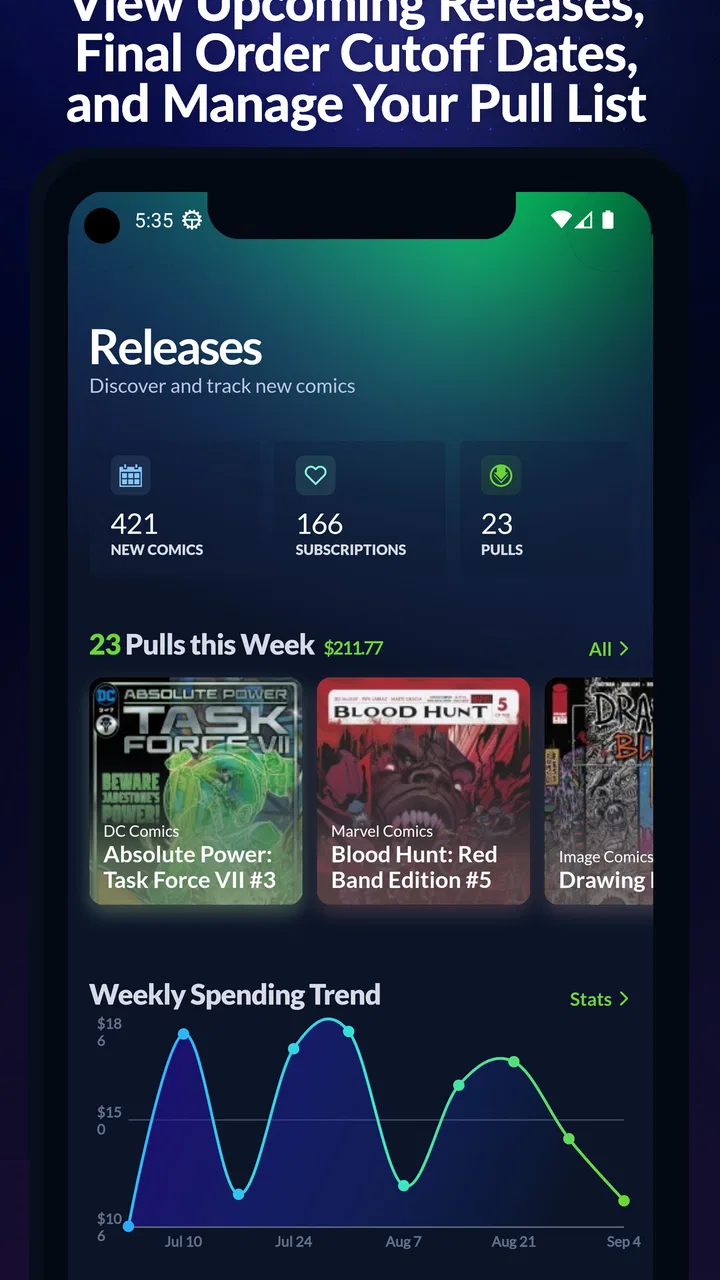
The most useful capability here is the connection between discovering upcoming comic releases and deciding which ones deserve a place on your personal pull list. Many comic apps are primarily catalogs, reading platforms, or social spaces. This one feels more useful when you are trying to answer a practical question: “What should I look for next, and how does that fit with what I already collect?”
You May Also Like

 Blood Strike: 2.5 Anniversary
Blood Strike’s Loadouts Turn Every Drop Into a Tactical Gamble
A close look at Blood Strike’s custom loadouts: how fast access to signature weapons reshapes its battle royale rhythm, rewards preparation, and narrows the gap between fights.

 Pandora - Music & Podcasts
Pandora’s Music Is Easy to Start, but Harder to Recover
Pandora’s strength is its low-effort path from a seed to a station. Its weak spot is how much confidence it asks you to place in connection, setup, and quiet recovery.

 8 Ball Pool
 Is Built on Rivalries, Rematches, and Routine
A close look at the rivalries, rematches, shared routines, and unanswered safety questions that turn a quick pool match into a persistent mobile community.

 Samsung Music
’s Quiet Strength Is Playing What You Already Own
Its reach comes less from spectacle than from dependable access to a personal library. That simplicity is both the app’s strongest retention engine and its ceiling.

 AccuWeather: Weather Radar
AccuWeather Review: A Quick, Clear Forecast for Everyday Decisions
For everyday plans, the best forecast is the one you can understand quickly. AccuWeather makes rain timing, radar, and local conditions easy to act on, with a few trade-offs.

 Hill Climb Racing
Why Hill Climb Racing Still Turns Crashes Into One More Run
A tiny car, a bumpy hill and one more upgrade: Hill Climb Racing keeps resurfacing because its simple chaos makes every near-miss feel personal.
More From Our News Desk



That distinction changes the way I use it. Instead of treating a comic database as something I open only when I need a title search, I can use the release view as a regular planning checkpoint. I look through what is coming, recognize the series I follow, and then compare that with the collection I have already organized. The result is less mental juggling, especially when several titles release close together.
A pull list is particularly helpful for readers who buy single issues rather than waiting for collected editions. It gives those readers a place to separate an active buying plan from a historical record of books already owned. That separation is important. A collection tells me where I have been; a pull list helps me decide what I intend to pick up next. Keeping those ideas distinct makes the app more useful than a simple checklist.
I also think the feature is valuable for readers who are still discovering their preferences. Someone who mostly knows a few favorite characters may use the release information to notice related series, new creative directions, or books they would not have encountered through a single publisher’s app. I would not call it a replacement for recommendations from a trusted comic shop employee, but it gives a much broader starting point than relying on memory.
Using the app as a weekly buying routine
In everyday use, I would treat the app as part of a short weekly routine rather than a constantly open companion. Before visiting a comic shop, I can review the releases I am following and check the pull list. That makes the visit more focused. I am less likely to remember only the most prominent title and overlook a smaller series that matters to me.
After buying comics, the collection side becomes the useful follow-up. Marking what I picked up keeps the record current, while the pull list remains a forward-looking plan. This workflow sounds basic, but it addresses a common collector problem: a list that mixes owned issues, wanted issues, and titles that were once interesting but are no longer priorities.
One practical tip is to use the pull list as a deliberate commitment rather than adding every title that looks appealing. If it becomes a giant wish list, its value drops because everything appears equally urgent. I get more from it when I reserve it for series I genuinely expect to seek out. Other possibilities can remain part of browsing until I decide they belong in my regular buying routine.
Another useful habit is to update the collection soon after a purchase instead of waiting for a large batch. Delaying that step creates uncertainty later, particularly with long-running series where issue numbers can blur together. The app is most effective when the information reflects real buying decisions rather than an idealized version of the collection.
A realistic example: preparing for a comic-shop visit
Imagine a reader who follows several monthly books, collects a few limited series, and occasionally buys older issues. On the morning of a shop visit, that reader can use the release view to identify the current titles, check the pull list to avoid forgetting a planned purchase, and then update the collection after returning home. The important benefit is not speed alone. It is confidence that the shopping trip is based on an organized record rather than memory.
This becomes even more useful when the reader has different buying priorities. Perhaps one series is essential, another is a trial, and a third is something to purchase only if the budget allows it. The app does not make that personal decision for me, but the pull-list structure gives me a place to make the decision before I am standing at a shelf surrounded by distractions.
For someone who attends conventions or travels between comic shops, a current collection record can also reduce duplicate purchases. I have found that collectors are often certain they remember an issue until they see it in a long box. A searchable, maintained list is more dependable than trying to reconstruct ownership from memory. The tradeoff is that the record is only as accurate as the updates I make, so the app rewards consistency.
Collection management without turning it into homework
The strongest approach is to start small. I would not recommend trying to enter an entire lifetime of comics in one sitting unless cataloging is itself your hobby. Begin with the series you currently follow, then add older books when there is a real reason to check them. This keeps setup manageable and lets the release-and-pull workflow become useful quickly.
That approach also reveals an important tradeoff. A digital collection can be wonderfully clear, but maintaining it requires a little discipline. If I buy a stack of issues and never record them, the app cannot protect me from duplicates or give me an accurate picture of what I own. Readers who dislike any form of cataloging may find the process more effort than the benefit is worth.
On the other hand, collectors who enjoy order can use the app as a central reference point. The advantage is not simply having titles stored somewhere. It is being able to connect past purchases with future plans. That relationship is what gives the app a distinct purpose among comic utilities.
Where it differs from common alternatives
A publisher-specific app is usually better when I want to read digitally inside that publisher’s ecosystem. A general note-taking app may be faster for creating a simple list. A spreadsheet can offer more flexible columns and custom formulas. A comic shop’s own pull service may be more convenient for placing orders directly with that shop. League of Comic Geeks makes the most sense when the priority is a comic-centered view of releases, collection history, and planned purchases in one environment.
That does not make it the best option for everyone. If I only read digital comics and have no interest in tracking individual issues, a reading subscription may be a more natural fit. If I manage an enormous collection with unusual sorting needs, a specialized desktop catalog may offer deeper control. If my main concern is ordering from one local store, the store’s own system may reduce steps.
The app’s advantage is balance. It is more purpose-built than a generic notes list, but less intimidating than a highly elaborate inventory system. I would choose it for a reader who wants meaningful organization without turning comic collecting into a database project.
Small habits that make the feature more useful
One non-obvious benefit of separating the collection from the pull list is that it helps with changing interests. I can stop actively pulling a series without losing the record of the issues I already own. That makes it easier to experiment. A title can move from “planned purchase” to “owned collection,” or leave the active plan while remaining part of the historical record.
I also recommend reviewing the pull list when a major storyline ends or when a new arc begins. That is a natural moment to ask whether I still want to follow every title. Without that review, a pull list can continue carrying old intentions long after my reading habits have moved on. The app gives me the structure to make that cleanup, but the judgment remains mine.
A third useful practice is comparing the release view with actual reading time, not just enthusiasm. It is easy to add books because a cover or character catches my attention. If I repeatedly buy issues that sit unread, the pull list may be reflecting impulse rather than a sustainable plan. Using it as a budget and time check makes the feature more valuable than using it only as a reminder.
For collectors who buy variant covers or multiple editions, I would be cautious about assuming that a single basic collection workflow will perfectly express every collecting preference. The more specific the inventory, the more important it becomes to verify that the organization matches the way you personally distinguish issues. Readers with straightforward single-issue collections will likely find the process easier than collectors who track every variation.
What the current app experience suggests
The current version is 3.4.1, and it supports devices running Android 7.0 or later. That makes it accessible to people who are not using a brand-new phone, which is useful for an app that may serve as a long-term collection reference. I would still keep the app updated when possible, because collection tools become more dependable when the information and interface remain current.
The free price is a major reason I can recommend trying it without much risk. A reader can test the release and pull-list approach before committing to a more serious cataloging habit. Free access also makes it easier to suggest to a friend who is just beginning to collect. The real cost is not money; it is the time needed to keep the list accurate.
The Teen rating should not be read as a promise that every comic represented will suit every teenager or adult. Comics cover a wide range of subjects, so I would still check individual titles before recommending them to a younger reader. For adults, the rating is unlikely to be a concern, but families should treat it as a broad app-level guide rather than a substitute for checking specific books.
Who benefits most from the pull-list workflow?
I think the best match is the recurring single-issue reader who wants to avoid missed releases and accidental duplicates. The app is also a strong fit for someone moving from casual reading into collecting, because it provides a clearer framework than scattered notes. Readers who visit comic shops regularly, follow several ongoing series, or alternate between current releases and older issues have the most to gain.
It can also help a group of friends who share recommendations, even if the app is used individually. Each person can maintain a personal buying plan while discussing discoveries elsewhere. I would not choose it solely as a social network, but its comic-specific organization gives those conversations a more useful foundation than a list of random links or screenshots.
New collectors should begin with a manageable set of titles and learn how the release and collection views fit together. Experienced collectors may appreciate the chance to bring current buying plans and older records into the same comic-focused space, although they should decide in advance how much detail they truly need. The app is most satisfying when it clarifies decisions rather than demanding perfect data entry.
Who should skip it? I would point digital-only readers toward a reading-focused service, and I would steer highly technical catalogers toward software built for exhaustive inventory control. People who buy comics only occasionally may find a simple phone note sufficient. The app earns its place when releases and collecting are regular parts of life, not when comic purchases happen once or twice a year.
My recommendation after using it
League of Comic Geeks succeeds because it concentrates on a problem comic readers actually have: turning a stream of releases into a manageable personal plan. Its release discovery, collection tracking, and pull-list organization work best together, with the pull list acting as the bridge between what is available and what I intend to buy.
I appreciate that it does not need to be treated as an all-purpose comic solution. It is not where I would go first for digital reading, detailed financial tracking, or a store-specific ordering process. Its strength is narrower and more practical. It helps make a recurring comic habit easier to remember, review, and adjust.
Because it is free, I would recommend giving it a trial by adding only the series you actively follow. If the release view helps you prepare for your next shop visit and the collection record prevents uncertainty about what you own, it is doing its job. If maintaining lists feels like work and your reading is mostly digital or occasional, another kind of comic app will probably suit you better.
For me, the deciding factor is control without excessive complexity. The app gives regular comic buyers a useful place to plan ahead while preserving a record of past purchases. That makes it a thoughtful choice for physical-comic readers, new collectors, and anyone whose pull list has outgrown memory.
FAQs for League of Comic Geeks
01What is League of Comic Geeks and how does it work?
League of Comic Geeks is a comprehensive app designed for comic book enthusiasts. It serves as a community-driven platform where users can track their comic collections, discover upcoming releases, and engage with fellow fans. The app offers features like personalized pull lists, reviews, and recommendations based on user preferences.
02Is League of Comic Geeks free to use, or are there any in-app purchases?
The app is free to download and use with its core features readily accessible. However, it may offer optional in-app purchases or subscriptions for advanced features or ad-free experiences. These extras can enhance the user experience but are not necessary for basic functionality.
03Can I use League of Comic Geeks offline, or do I need an internet connection?
While some features of League of Comic Geeks may be available offline, such as viewing your saved comic lists, the app primarily relies on an internet connection. This is essential for accessing the latest updates, syncing data, and interacting with the community features.
04How does League of Comic Geeks ensure the accuracy of its comic book database?
League of Comic Geeks maintains accuracy through a community-driven approach where users can contribute and verify comic information. Additionally, the app collaborates with publishers and utilizes official sources to keep its database up-to-date with the latest releases and details.
05Is my personal data safe with League of Comic Geeks?
League of Comic Geeks prioritizes user privacy and data security. The app follows standard industry practices to protect personal information, employing secure connections and encryption. Users are encouraged to review the app’s privacy policy for detailed information on data handling and protection measures.
Pros
- Comprehensive comic database.
- User-friendly interface.
- Customizable pull lists.
- Active community discussions.
- Regular updates and news.
Cons
- Limited offline access.
- Occasional sync issues.
- Some features require login.
- Ads in free version.
- Mobile notifications can be delayed.

League of Comic Geeks
Gallery